



For many credit unions, core modernization has moved from a future consideration to a current strategic priority.
Member expectations continue to rise. Digital services are expanding. Integration requirements are growing. At the same time, many institutions are still operating on technology platforms that were designed for a very different era of financial services.
The challenge is not simply maintaining aging technology. The challenge is ensuring your core platform can support your credit union's goals for the next five, ten, or even twenty years.
As credit unions evaluate their long-term technology strategies, many are asking the same question:
What should a modern core banking platform look like, and how can it help prepare our institution for the future?
The answer begins with understanding the role core modernization plays in growth, efficiency, and member service.
Why Core Modernization Is Becoming Essential
Your core banking platform serves as the operational foundation of your credit union. It supports member accounts, transactions, lending activities, reporting, third-party integrations, and countless daily processes.
When a core system becomes difficult to maintain or adapt, the impact extends far beyond the IT department.
Credit unions operating on aging platforms often encounter challenges such as:
- Limited integration capabilities
- Increased manual processes
- Slower implementation of new products and services
- Greater operational complexity
- Higher maintenance requirements
- Reduced flexibility when responding to member needs
NCUA Examination Readiness
NCUA examiners work from reports, data extracts, and audit trails that come primarily from your core system. An examiner who requests five years of member loan data, a specific transaction history, or documentation of a particular process should be able to receive that information cleanly and quickly. In practice, the quality of your core's reporting and data export capabilities directly determines how much staff time your examination preparation requires and how smoothly the examination itself runs.
Specific core dependencies:
- Call Report data accuracy and production
- Financial Performance Report accuracy
- Share and loan portfolio reports by examiner-specified parameters
- Member account history with a complete audit trail
- Risk concentration and liquidity reporting
These challenges may develop gradually, making them easy to overlook. Over time, however, they can affect both operational efficiency and the member experience.
Modernization is about creating a foundation that allows your credit union to remain agile as technology and member expectations continue to evolve.
The Industry Shift Toward SaaS Core Banking
Across the financial services industry, organizations are increasingly moving toward Software-as-a-Service (SaaS) technology models.
Traditional core systems often require extensive infrastructure, complex upgrades, and significant internal resources to maintain. SaaS platforms offer a different approach.
Benefits of a modern SaaS core can include:
- Continuous platform enhancements
- Reduced infrastructure management
- Improved scalability
- Faster deployment of new features
- Enhanced security and resiliency
- More predictable technology planning
Rather than relying on major upgrade cycles every few years, credit unions gain access to ongoing innovation that helps keep pace with changing industry demands.
For leadership teams, this creates an opportunity to focus less on maintaining technology and more on leveraging technology to support strategic objectives.
The Importance of an Open Technology Ecosystem
Today's credit unions rely on more technology partners than ever before.
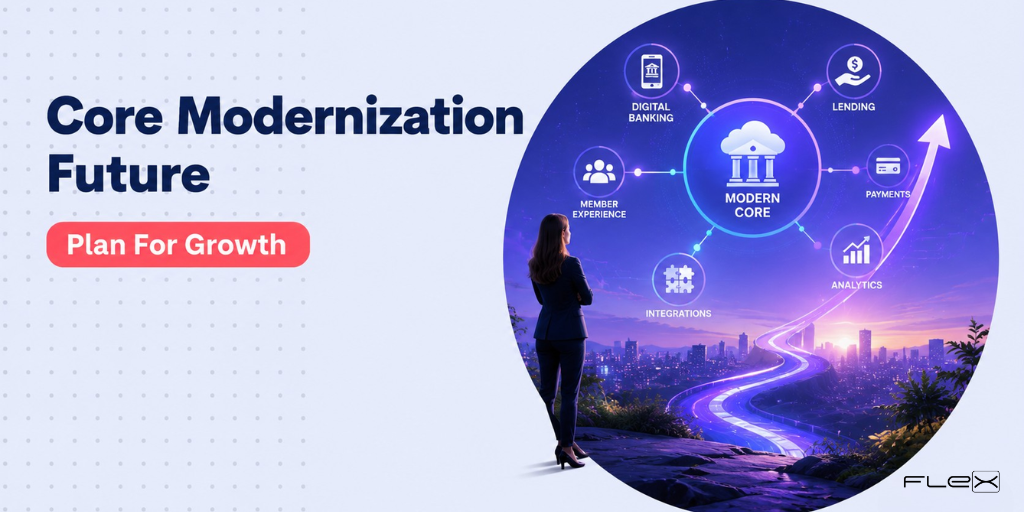
Digital banking, lending solutions, payment platforms, fraud tools, analytics systems, and member engagement technologies all play critical roles in the member experience.
Because of this, modern core platforms must do more than process transactions. They must serve as a flexible foundation that connects the entire technology ecosystem.
This is where the integration strategy becomes increasingly important.
Through solutions such as FLEXBridge, FLEX's open API platform, credit unions gain access to a growing ecosystem of technology partners and integration opportunities.
Today, FLEX supports more than 200 FLEXBridge and other integration partners, giving credit unions greater flexibility to build technology environments that align with their strategic goals.
As technology continues to evolve, an open ecosystem helps institutions adapt more quickly and take advantage of emerging opportunities.
Modernization Is a Business Strategy, Not Just an IT Project
One of the most common misconceptions about core modernization is that it is primarily a technology initiative.
In reality, core modernization affects nearly every aspect of a credit union's operations.
A modern core can support:
- Improved employee efficiency
- Faster product delivery
- Better member experiences
- Greater operational consistency
- Future growth initiatives
- Long-term technology flexibility
For executive leadership teams, modernization decisions often have implications that extend well beyond technology budgets.
The core platform selected today can influence how effectively an organization serves members, supports employees, and responds to future market changes.
That is why many credit unions are evaluating modernization strategies long before a conversion becomes necessary.
Planning for the Future Starts Today
Waiting until a legacy system creates significant operational challenges can limit available options and increase project complexity.
The most successful modernization efforts typically begin with strategic planning rather than immediate conversion discussions.
By evaluating future technology goals early, credit unions can:
- Assess current capabilities
- Identify long-term requirements
- Understand modernization options
- Develop realistic timelines
- Reduce future implementation risk
Even institutions that are not actively considering a core conversion today can benefit from understanding where core technology is heading and how modern platforms may support future growth objectives.
The earlier these conversations begin, the more flexibility leadership teams have when making critical technology decisions.
Looking Ahead
The future of credit union technology will be defined by flexibility, integration, scalability, and innovation.
As member expectations continue to evolve, core banking platforms must evolve alongside them.
Modernization is no longer simply about replacing aging technology. It is about creating a foundation that enables growth, improves efficiency, and positions credit unions for long-term success.
While every institution's modernization journey will be different, one thing remains clear.
The technology decisions made today will help determine how successfully credit unions compete tomorrow.
Key Takeaways
- Core modernization is becoming a strategic priority for credit unions seeking long-term growth and operational efficiency.
- Legacy systems can create limitations around integrations, innovation, and scalability.
- SaaS-based core platforms provide greater flexibility, ongoing enhancements, and simplified technology management.
- Early modernization planning helps institutions reduce risk and prepare for future opportunities.
- Open core platforms allow credit unions to gain access to a growing ecosystem of technology partners and integration opportunities.

Frequently Asked Questions
What is core banking modernization?
Core banking modernization is the process of upgrading a credit union's core technology platform to improve efficiency, enhance integrations, support innovation, and prepare for future growth.
Why are credit unions modernizing their core systems?
Many credit unions are modernizing because aging platforms can make it more difficult to launch new services, integrate with emerging technologies, and meet evolving member expectations.
What is a SaaS core banking platform?
A SaaS core banking platform is cloud-based software that is maintained and updated by the provider. This approach allows institutions to receive ongoing improvements without managing large-scale upgrade projects.
When should a credit union start planning for modernization?
Credit unions should begin evaluating modernization strategies before a conversion becomes necessary. Early planning provides more flexibility, better preparation, and a smoother path forward.
Learn More About the FLEX Modern Core Technology Stack
Core modernization is one of the most important technology decisions a credit union can make. Whether you're actively evaluating your options or simply planning for the future, understanding the direction of modern core technology can help your institution prepare for what's next.
Contact FLEX Credit Union Technology to learn more about the FLEX technology stack and our vision for the future of credit union core banking.